Tuesday, April 24, 2018

Where are the locks?

There aren't any.  What ? A canal without any locks?  Well, you only need locks when there is a significant change in elevation, like going over a mountain range, and there is only a few feet difference between the elevation of the Red Sea and the Mediterranean Sea.  That is why the Suez Canal is nicknamed "The Ditch."

When the canal was dug in 1869, it was done by hand, a monumental task covering (or rather uncovering) about 78 miles.


In the south part of the canal all you could see was mountains of sand lining the canal.

The canal zone includes the canal itself, 2 lakes and the land immediately surrounding them. The zone is separated from the rest of the land by a fence.  In some places there was new construction on the other side of the fence.There were occasional piles of things that looked like shipping containers and roads leading to the canal, but mainly just sand.


I have no idea what this is.


The military presence is shown by "guard towers" and various installations.


       At one point there was a landing pad for a helicopter with a road leading to the canal.


Originally the canal itself was only wide enough for one ship, except in the 2 lakes.  In 2015 a second parallel canal was dug, so the whole thing is now a "2 way street."


As we approached the Mediterranean Sea, more signs of civilization appeared.


Saturday, April 21, 2018

Sea-ing Fish

The Red Sea has some of the world's most spectacular coral reefs.  Some say they are better even than Australia's Great Barrier Reef.  There are three ways to see the beauty.

Scuba:  This takes equipment and training.  We have friends who do this regularly.  We do not.

Snorkeling:  This involves minimal equipment and cost,  However, this does involve getting into the water and swimming or at least floating with some kind of flotation device.  Those of you who know me well will realize that this is something which I am not comfortable doing.

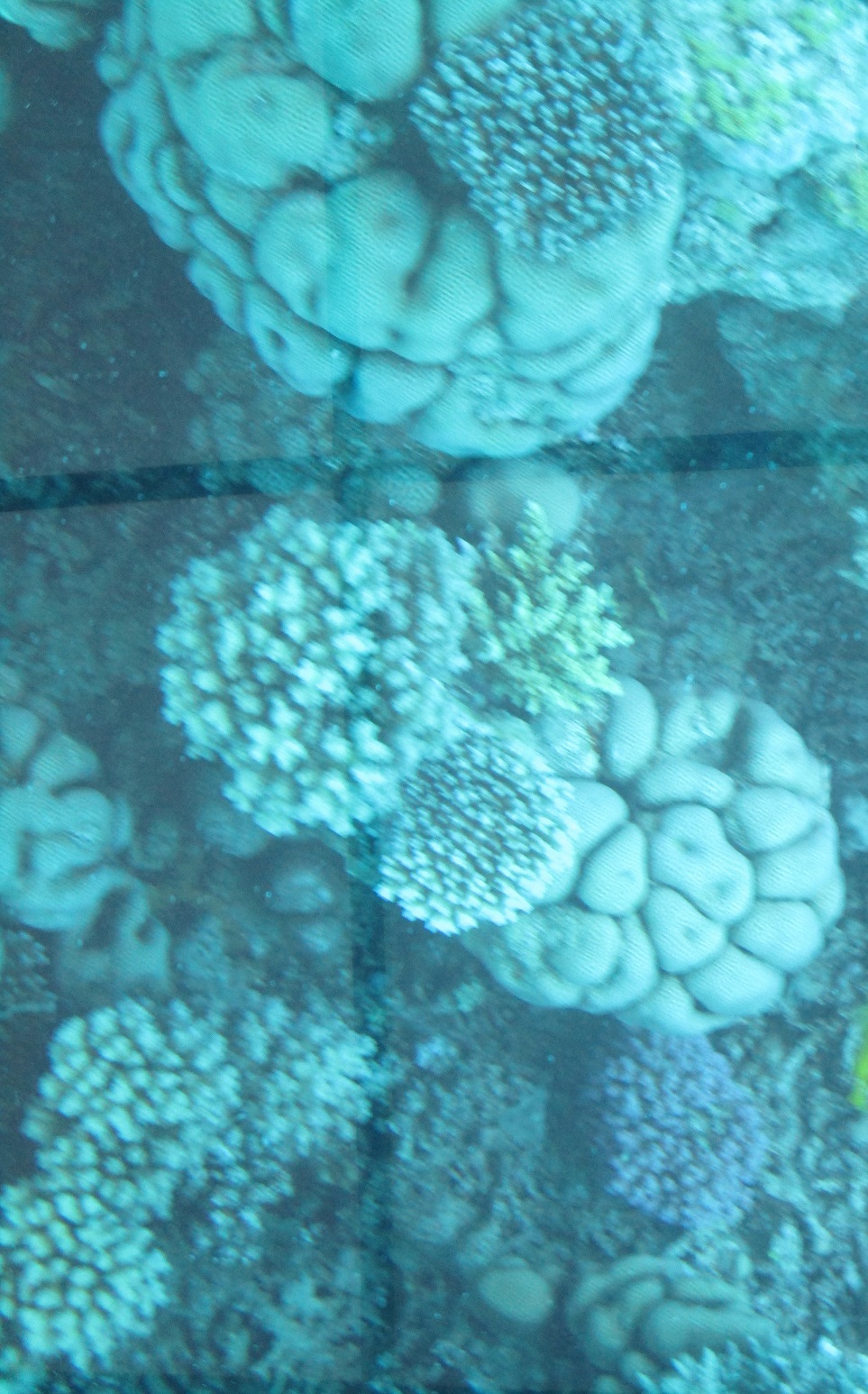
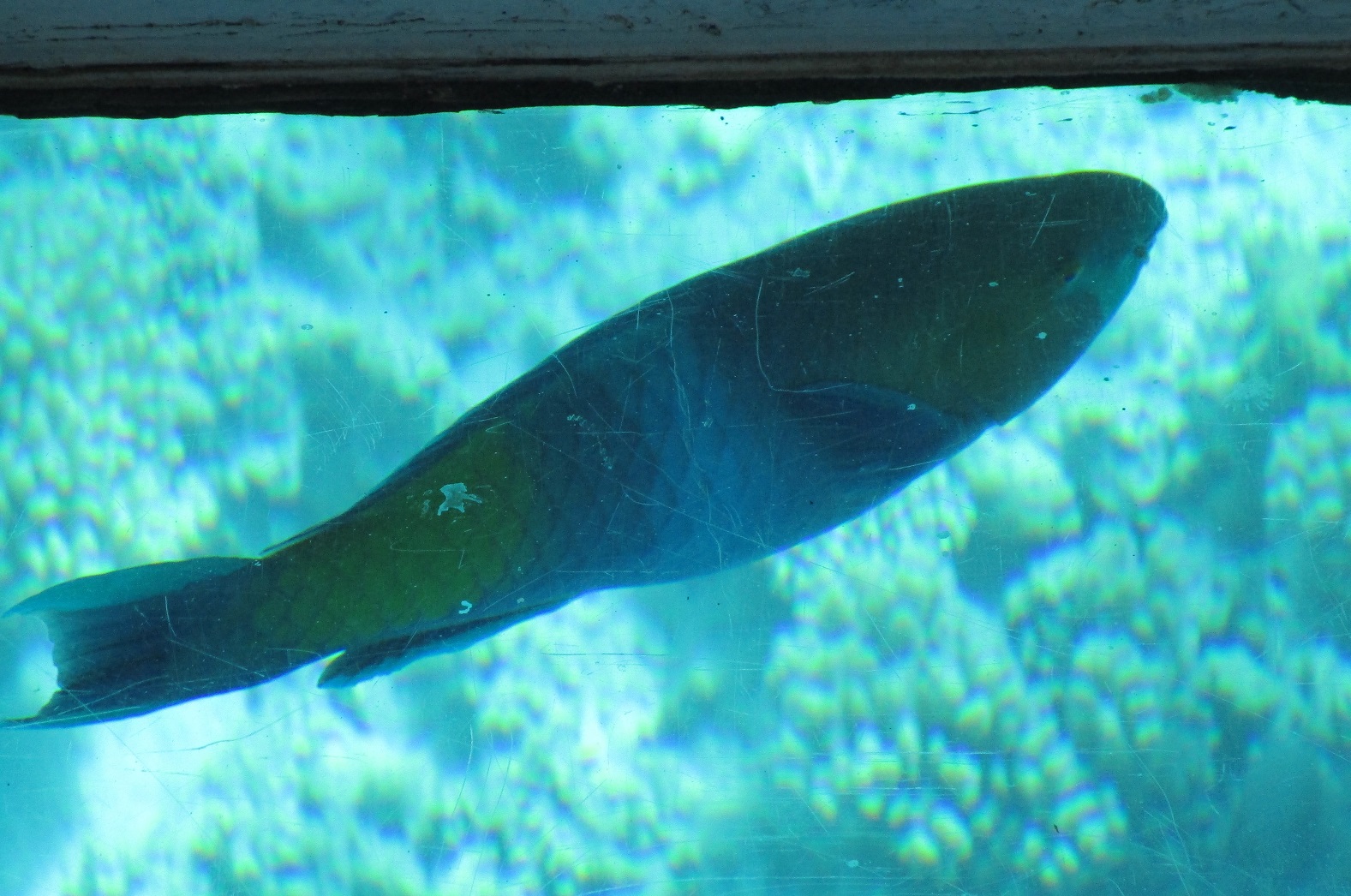
Glass bottom boat.  Now, that is something I can do, so I did.  After about a half hour drive through Sharm el Sheikh, we arrived at a resort, one of many, which had a floating dock out to glass bottom boats.  The arrangement was to have 8 windows in the bottom of the boat with seats all around, so you can see whatever is below the boat.  Our boat traveled to an area where the coral is close to the surface.  Fish like the coral area because some eat the coral and others like the plankton churned up by the boat.  Without further ado, I present some of what we saw.


Yes, this is a fish, but just the front half!


Our boat left from a nice resort, one of many which lined the beach. 


Where there was irrigation, the plantings flourished.  But away from the tourist area, this, too, was a desolate rocky area.


Sharm el Sheikh is at he very tip of the Sinai Peninsula.  It looks as if it could be a part of Africa, but it is actually part of Asia.  Arabic is the main language spoken here, as in the rest of Egypt.

Friday, April 20, 2018

A Camp Trip

There are 73 different Bedouin tribes in Egypt.  I visited one of their camps.


This is the most inhospitable land I have ever seen.


Five pickup trucks of passengers from the Viking Sun traveled in the bed of 5 covered pickup trucks to venture for several miles on a "freeway",  then through the desert for several more miles to reach the settlement.  I say "freeway" because it was 4 lane, but who ever traveled on a freeway that has speed bumps?  A convoy of double bottom dump trucks had a bit of a problem with one of these.  Four trucks made it past, but the last one, somehow, did not.


The drive across the dessert was interesting.  There seem to be several tracks which have the loose sand plowed aside to reach solid packed sand.  The truck drivers each had his own idea of which track was smoothest and/or fastest.  We wove back and forth, bumping our way along until we arrived at our first stop -- the nearest well.  It was 25 meters (about 80 feet) deep, and was one of the shallower wells in the area.  I am not sure how they dug it, but according to our guide, they find the spot to dig by withholding water from a camel for 2 months, then turning it loose.  The camel smells the water, and they dig the well.


Next we drove to the actual settlement where about 70 people lived.  The settlement was not at all like I expected.  There were no tents, no herds of goats or camels and few people.  We saw fewer than 10, but there was no explanation about where the others were.  Perhaps they stayed out of sight in some of the other buildings or perhaps this was just a "show" village for tourists. The buildings were usually made of some sort of brush walls with palm frons or brush for a roof or just open sided shelters.

We were greeted by a group of men, playing drums and some kind of long stick with a string  played at intervals with a kind of a bow.  It seemed to produce only one sound, a wailing screech.

Our guide lead us to one of the shelters where we were served tiny cups of steaming hot tea in metal cups.  He then explained, in detail the family life and marriage customs of the tribe.  Children under the age of five all play together.  After that the girls live with the mothers and the boys with the fathers.  They are not allowed to have any contact with members of the opposite sex.  Women do only "women's work," taking care of the girls, cooking, and having babies.  The names of the children are entered into the tribal register, maintained by the sheikh.  He sits in a shelter overlooking the village and makes notes on the behavior of the people.  When a girl is physically able to have children, she is eligible for marriage, whether she is 9 or 19 years old.  If a young man decides he wants a wife, he has 2 choices.  He can marry one of his cousins from the tribe or look for a wife from another tribe.  If he chooses to stay within the tribe, he already know the girls because he played with them until they were 5 years old.  His mother meets with the other mother and negotiates a price, usually 10 camels.  If he is too poor, the tribe contributes to the price.  Since the sheikh has been writing down his good and bad deeds and qualities, that can change the price.

Selecting a bride from another tribe is more complicated.  Somehow the tribes must mingle to some extent, so if he hears that there is an eligible girl in another tribe, his mother visits the tribe, talks to the mother who will offer a daughter.  The three visit for a while so the mother can decide if the girl is suitable.  If so, the son will visit the future mother-in-law for a chat.  The prospective bride watches, but out of sight.  If she likes him, she sends in a glass of tea with sugar.  If not, no sugar, so he knows whether or not to go to the next step.  At the next visit, he meets her, sort of.  In a very controlled atmosphere, with the girl covered from head to toe, except a thin slit for her eyes.  After this meeting, he can accept and the exchange progresses.  If he rejects her, he gets a black mark in his book with the sheikh.  The process goes on.  If he gets too many black marks, he is too fussy and no one will help him, so I guess he remains alone.  It is all very complicated, so I may not have it right.

Next item on the agenda was a camel ride, if you wanted to.  I did.  My camel driver took lots of pictures of me, and he was quite a joker!


So far, the only people we met were men.  Now we saw the only women, but she was not allowed to talk to us.  Her job for the day was to show how they made a bread by rolling out a dough of flour, water and a bit of salt.  She cooked this over an open fire until it was spotted with brown.  We all tried it, and it was delicious.  A young girl who was probably her daughter, sat silently on a bench.  We were allowed to take pictures of both the woman and her daughter, if it was her daughter.  As soon as we had all tasted the bread, both of them vanished.


The Bedouins use local herbal remedies to treat all sorts of things and a vitamins to maintain health.  One of the men explained how several compounds were used and offered to sell them to us, for just $10 a bag.  There were no buyers.

When we left the shelter we  were treated to a display by 2 whirling devishes.  They spun for almost 5 minutes, non stop, while manipulating various "skirts" over their heads.  Amazing!  I took videos of them, but no pictures, so if you want to see them you will have to visit me.  I have not figured out how to send videos.

Fortunately the ride back was quicker, but unfortunately , because of the speed, it was a lot bumpier.


Tuesday, April 17, 2018

Ahh - Aqaba

Jordan is land-locked except for one tiny stretch.  Until a few years ago they had only 7 miles of coast on the Red Sea.  Then they traded with Saudi Arabia to get 23 more miles of coast in exchange for some desert land.  They export phosphates, so they needed more space to build docks.  I do not think Jordan got such a good deal, since oil was discovered on the land they gave up.


Once again we were greeted with music, 10 young men in Arab garb, playing drums and an instrument which sounded like a bagpipe, and this enthusiastic young lady who wanted to dance, so I accepted the invitation.


Over half of the passengers took the 10 hour tour to Petra, but we had already been there, so we took the included tour, A Glimpse of Aqaba.  There was not any more to see than that.  The surrounding area is rugged desert.  Our tour took us from one end of the port to the other, which drive took about half an hour of slow driving.  We saw the location of the fort held by the Ottoman Empire which Lawrence of Arabia stormed in 1917 to return the area to Arab control.  It was closed for renovation.

The town has the usual minarets and small
market stalls selling souvenirs and spices.  I think we have seen enough souks that nobody was very interested in shopping.


In Roman  times, the town was called Ayla.  The ruins are in the middle of town, surrounded by huge hotels from all the major chains and McDonalds and Starbucks.


The country takes a dim view of littering.  I am not sure where I would get any radioactive material to discard, but I do not think I am going to try to find any.

Thursday, April 12, 2018

O man! What a Difference!

Actually it is Muscat, Oman, but I could not resist trying to make a pun.  Unlike our last few stops, the country of Oman is basically a desert, at least in the area we visited.  Instead of palm thees and lush vegetation we now see green areas only because of irrigation.  Rugged and barren mountains surround the city.  Everyone seems to take pride in their city.  There was virtually no trash in the streets unlike many of the other cities and countries we have visited.


When the Portuguese occupied the area they built watch towers on the peaks surrounding the city from which they could see anyone approaching from land or from sea.


The current Sultan took over, by overthrowing his father, in 1970.  He vowed to modernize and clean up the city, which he has done.  In 1975 oil was discovered in the area.  The Sultan, an absolute ruler and head of all branches of the government, has used the oil money for the benefit of the people.  They have free or almost free schools, medical care and social services.  We saw neither homeless people nor beggars.  The Sultan has several palaces but his life is very private.  No one knows if he is married or how many wives he has.  (He is allowed by law to have four.)  No one knows if he has sons.  Lately his health has not been good and it is thought that he was in Germany for health treatment recently.  When he dies, the family will choose the next Sultan. Since he has been a stabilizing force in the area, There is much speculation what the next ruler will do.

We also saw no motorbikes, a real switch from India.   When we asked our guide about this, we were told that it was too hot, and anyway, everyone has at least one car and perhaps more.  As we drove around, the road was lined with modern buildings housing every brand of car you could name and a few I never heard of.


New construction and mosques were everywhere.  The buildings look new, and they are all white or beige or some shade in between.  No building may be taller than 14 stories, and most are not more than 4. New construction and mosques were everywhere.  No bright colors are allowed. 


One of the Sultan's building projects has been the Grand Mosque which can accommodate 20,000 worshipers, mainly men, under one roof.  The carpet in the worship area is the largest single carpet in the world, weighing 20 tons.  It was woven but young girls in Iran.  Unfortunately we were not on the tour which went inside the mosque, but we saw the grounds and the outside and it was impressive.  Gardeners were watering the new plantings and cutting the grass.  Everything growing must be watered since they get very little rain.  Most of the water comes from desalination plants.

We made the mandatory visit to the souk, or marketplace.  It usually closed during the heat of the day, from 1:00 to 4:00, but they were staying open this day because there were 2 large cruise ships in town. 


Interior store in the souk


The souk caters to tourists, but local people also shop there for everything from spices to clothing to housewares to hardware.  I saw some of the largest plastic bowls that I have ever seen.


Many of the shoppers were tourists, but some of the local people such as this man were dressed in the traditional garb.


We also saw the official Guest house for visiting dignitaries and a museum which showed the traditional dress for all the states in the country and models of various forts.  However, we were not allowed to take pictures in the museum, so I cannot show you how colorful they were.
The official Guest House
The Museum